
Battery Management Systems
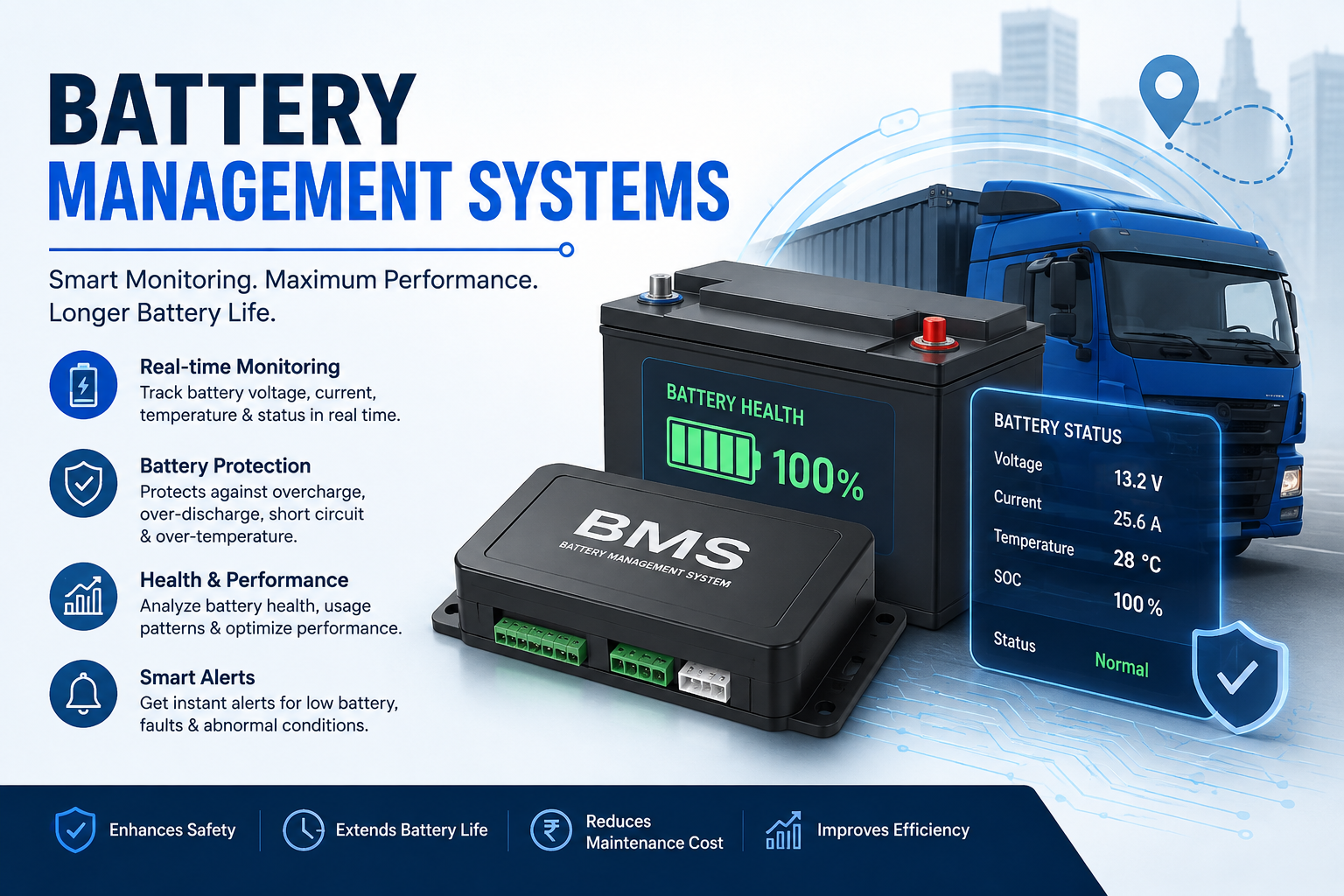
Battery Management Systems (BMS) help monitor and manage vehicle batteries for safe, reliable, and efficient operation. It tracks battery health, voltage, temperature, and charging status, helping prevent battery-related issues and improving overall vehicle performance.With real-time battery monitoring, businesses can maintain better control over their vehicles, reduce unexpected breakdowns, and improve battery life.
What is a Battery Management System (BMS)?
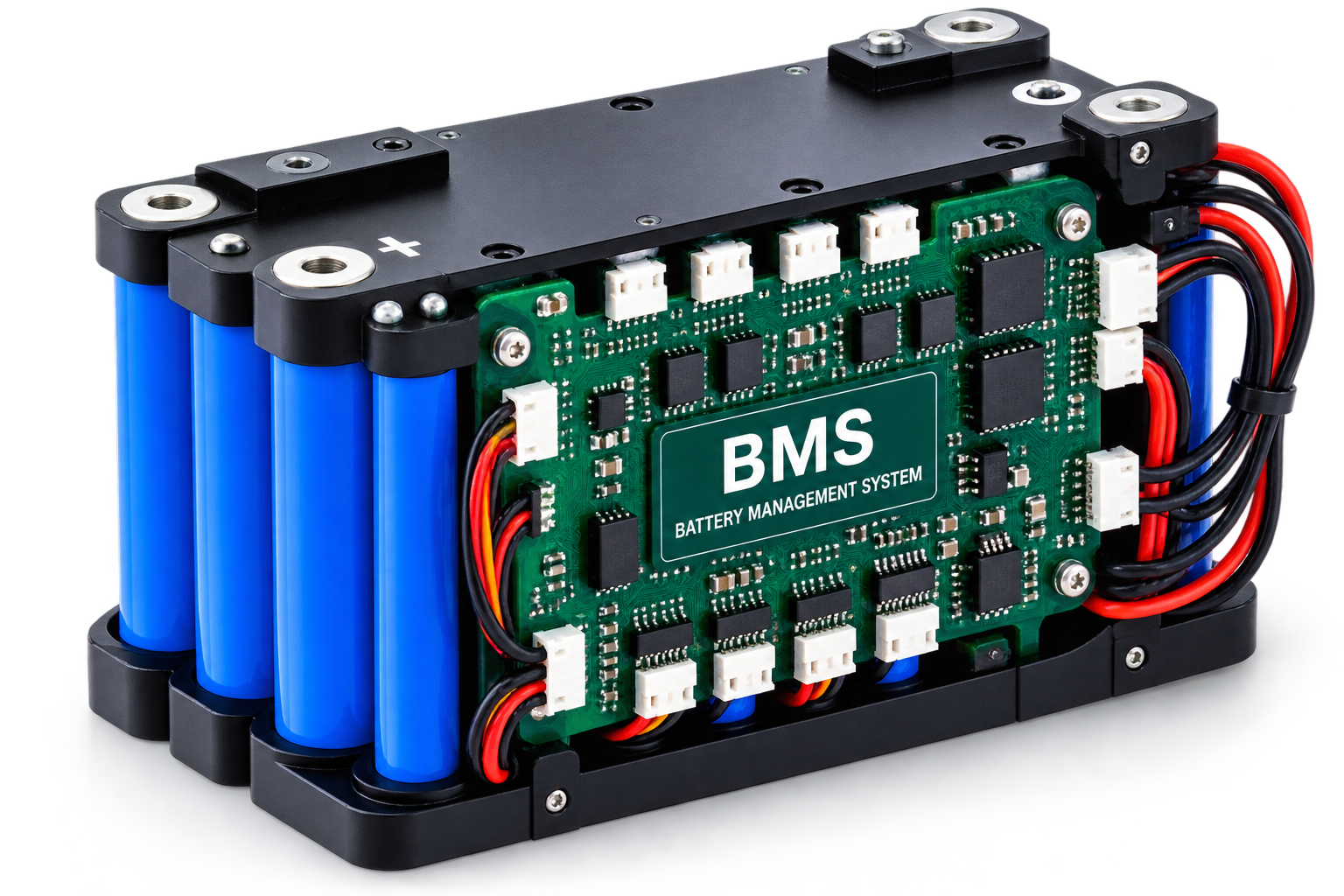
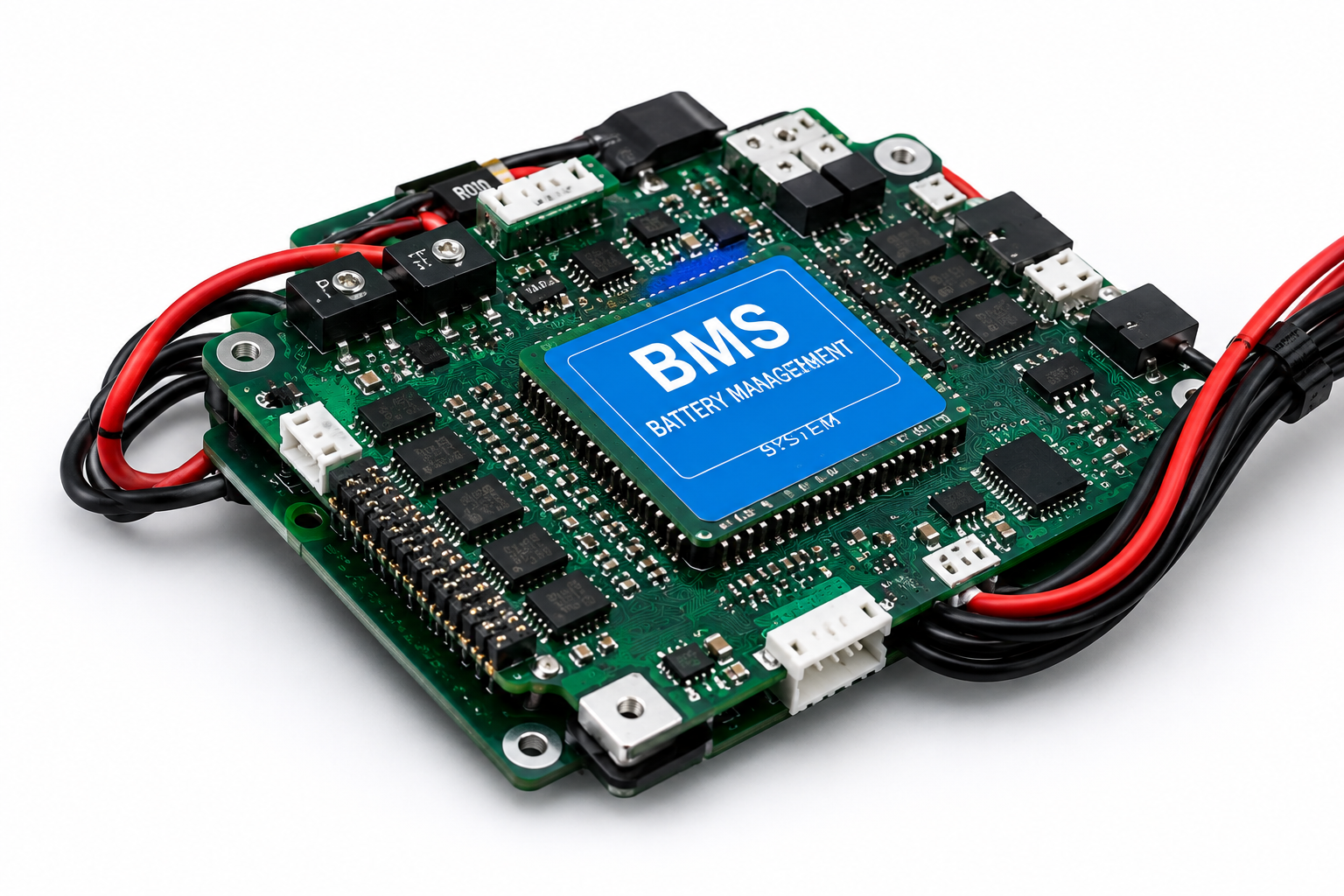
ABattery Management System (BMS) is an intelligent electronic system that monitors and manages a rechargeable battery pack. It continuously checks important parameters such as voltage, current, temperature, and battery health. A BMS helps protect the battery from overcharging, over-discharging, overheating, and short circuits, while also improving battery performance, safety, and lifespan. Key Functions of BMSBattery Monitoring – Monitors voltage, current, and temperature in real time.Cell Balancing – Keeps individual battery cells balanced for better performance.Overcharge Protection – Prevents excessive charging.Temperature Protection – Detects and helps prevent overheating.Battery Health Monitoring – Tracks battery condition and performance.Safety Protection – Helps protect against abnormal conditions and electrical
Key Features of BMS
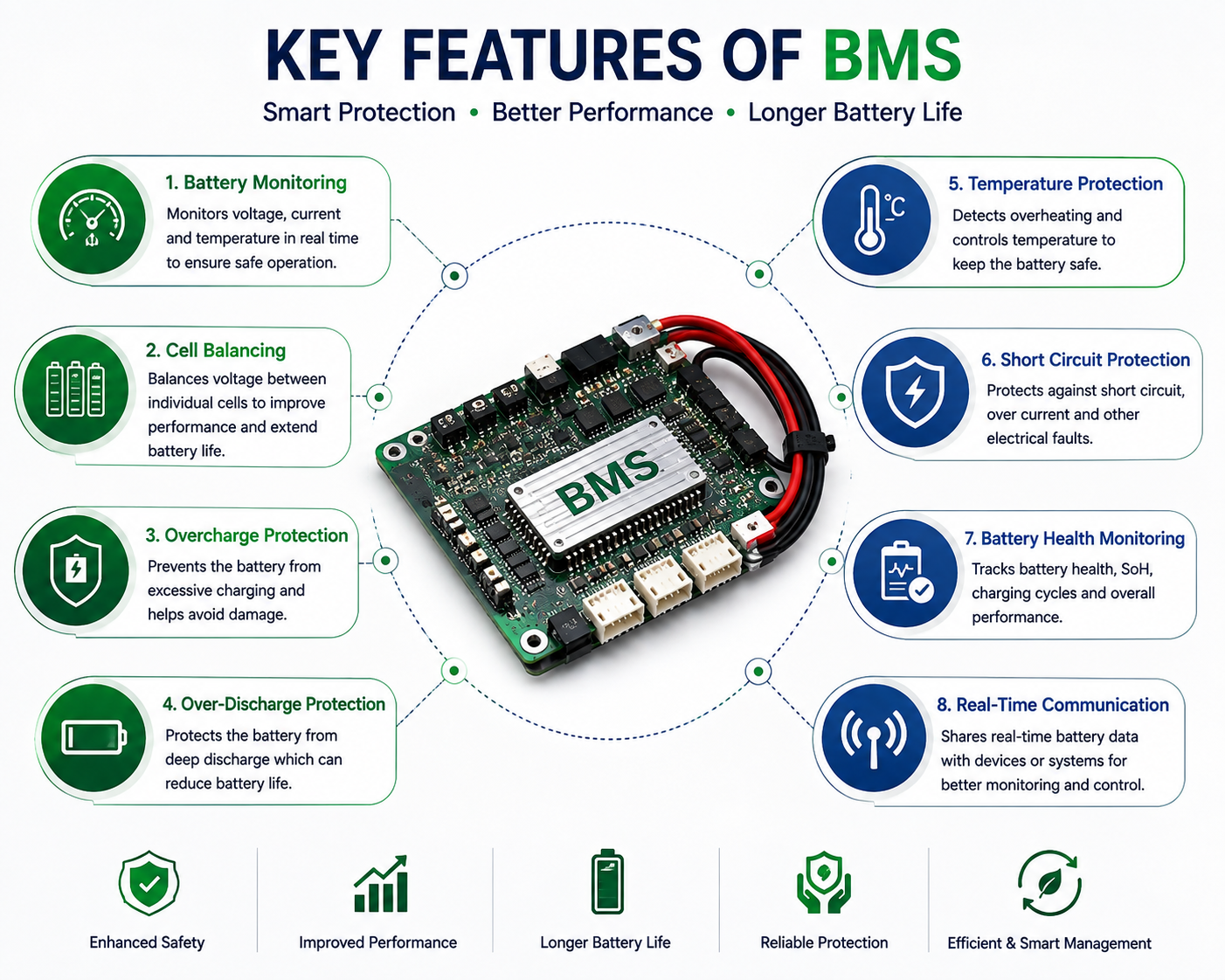
Battery Monitoring: Continuously monitors battery voltage, current, and temperature in real time to ensure safe and efficient operation.
Cell Balancing: Maintains balanced voltage levels between individual battery cells, helping improve battery performance and extend battery life.
Overcharge Protection: Prevents excessive charging and protects the battery from potential damage caused by overcharging.
Over-Discharge Protection: Prevents the battery from deep discharge, helping maintain battery health and increase its lifespan.
Temperature Protection: Monitors battery temperature and helps prevent overheating to ensure safe operation.
Short Circuit Protection: Protects the battery from short circuits, excessive current, and other electrical faults.
Battery Health Monitoring: Tracks battery health, charging cycles, and overall performance to provide better battery management.
Real-Time Communication: Shares important battery data with connected devices and systems for real-time monitoring and better control
